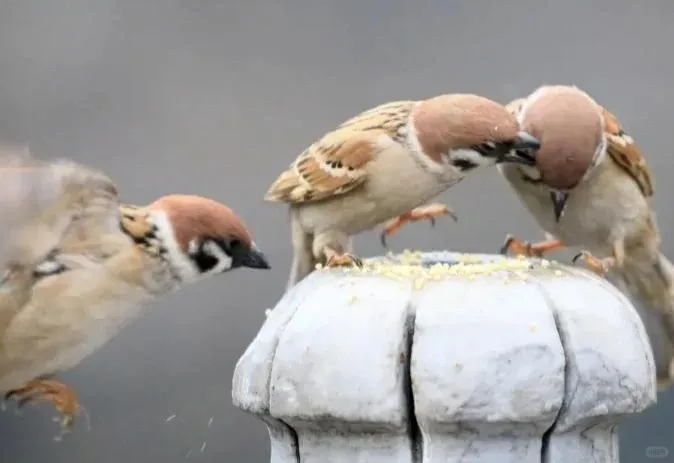
Most people still use the phrase “bird brain” as an insult — but if you’ve ever shared your home with a parrot, a crow, or even a small finch, you know how unfair that saying is. Birds are far more intelligent and emotionally perceptive than we once believed. They can recognize human faces, remember specific sounds, solve puzzles, and even recall experiences that happened years ago.
What makes birds so extraordinary is the way their memory works. Unlike mammals, they don’t have a large neocortex — the part of the human brain responsible for logic and recall — yet they’ve evolved an equivalent powerhouse: the Nidopallium Caudolaterale (NCL). This region combines the abilities of our prefrontal cortex and hippocampus, allowing birds to store long-term memories, plan actions, and navigate complex environments. In a 2020 experiment, the African Grey parrot Griffin outperformed several Harvard students in memory tests, proving that bird intelligence goes far beyond instinct.
But bird memory isn’t only about survival. It’s deeply emotional and social. Many parrots remember the faces and voices of their owners for decades; crows can recall humans who once threatened them and even warn other crows about those same faces years later. These stories reveal that avian memory holds both logic and feeling — a blend of science and soul that connects them to us more than we imagine.
When my cockatiel heard a melody I used to hum every morning — months after I stopped — she sang it back softly, as if reminding me that she still remembered. That moment changed how I see her forever.
💬 Rachel ’s Tip
So yes, birds have good memory — not only in the scientific sense, but in a profoundly emotional one. They remember places, people, voices, and the bonds that shaped their lives. And perhaps that’s why they always seem to look at us with such familiar eyes — because they truly do remember.
How a Bird’s Brain Stores Memories
Just like humans, birds form memories through a network of interconnected brain regions.
But instead of a large neocortex, they rely on specialized structures that evolved to serve the same purpose — processing emotions, sound, and spatial awareness.
These hidden systems explain how a bird can remember your face, your voice, and even the exact place it buried a seed months ago.
The NCL: A Bird’s “Super Brain”
The Nidopallium Caudolaterale (NCL) is the command center of a bird’s cognition — the part that handles reasoning, attention, and memory.
It’s functionally similar to the human prefrontal cortex and hippocampus combined, meaning it helps birds plan, solve problems, and store both short- and long-term memories.
Scientists have discovered that parrots and crows show brainwave activity in the NCL almost identical to humans performing memory tasks.
In one famous study at Harvard University, an African Grey parrot named Griffin recalled object-color pairs with 85% accuracy — outperforming 21 human students.
💬 Rachel’s Note:
“When I trained my cockatiel, Sunny, to fetch colored beads, she didn’t just memorize the color — she remembered the order I placed them in days later. That’s when I realized how sharp her mind truly was.”
The Amygdala: Where Emotions Are Stored
Memory in birds isn’t purely mechanical — it’s emotional.
The avian amygdala works like our own, linking experiences with feelings of safety or fear.
That’s why birds remember kindness — and cruelty — with remarkable accuracy.
Parrots, for instance, can recognize the tone of voice or gesture that once scared them, even years later.
Many caregivers notice “trust shifts” after a bad experience: one rough grab or loud scolding can create a long-lasting emotional memory stored deep in the amygdala.
Conversely, consistent gentleness and feeding routines build familiarity and affection that may last a lifetime.
💬 Rachel’s Note:
“Sunny once panicked after being accidentally wrapped in a towel for grooming. For months afterward, even the sight of white fabric made her freeze. It taught me that birds don’t forget fear — but they also don’t forget love.”
Mirror Neurons: The Secret Behind Mimicry
Birds are brilliant imitators, and their ability to copy us comes from mirror neurons — the same type of brain cells humans use for empathy and learning by observation.
These neurons activate both when a bird performs an action and when it watches someone else do the same.
That’s why your parrot might tilt its head when you do, yawn when you yawn, or mimic your favorite phrase after hearing it only a few times.
It’s not random — it’s how they build social memory and emotional connection.
Researchers have even found that budgerigars (budgies) can memorize up to 24 distinct movement sequences with less than 5% error, thanks to these powerful mirror-neuron circuits.
💬 Rachel’s Note:
“Sunny copies the rhythm of my morning coffee stir — tap, tap, pause — almost perfectly. It’s not imitation; it’s recognition. She’s remembering me through my habits.”
Together, these three systems — the NCL, amygdala, and mirror neurons — give birds an extraordinary form of intelligence:
one that blends logic, emotion, and empathy.
It’s not just that birds have good memory — it’s that they remember in color, in feeling, and in connection.
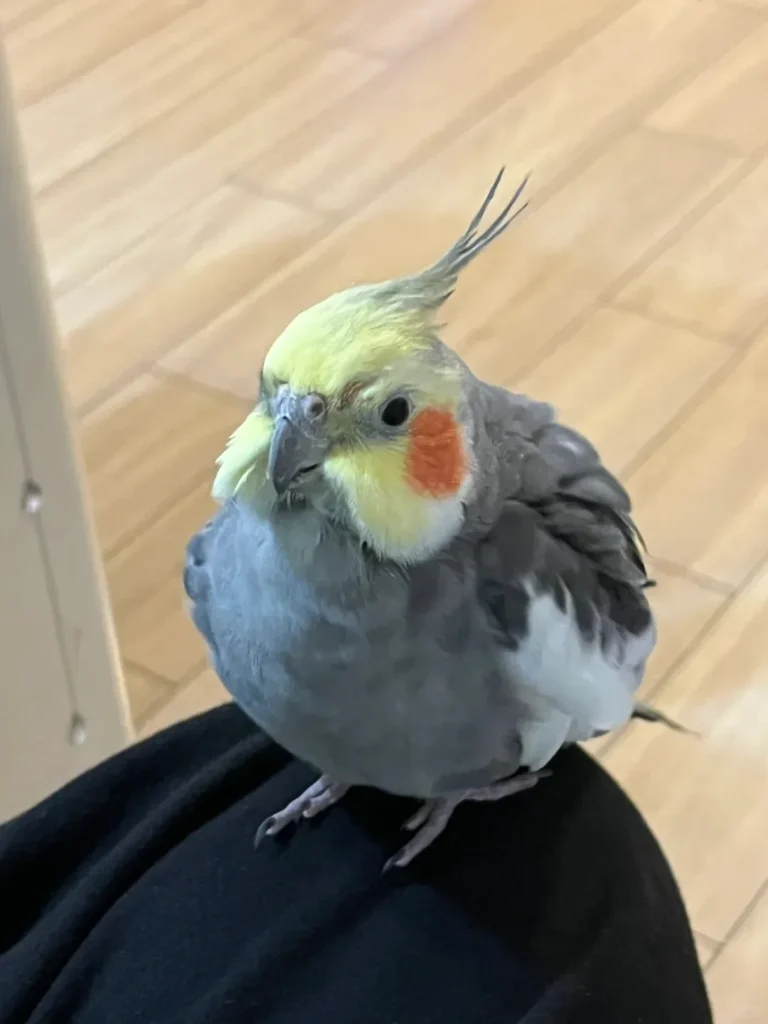
Types of Memory in Birds
Birds rely on several different kinds of memory — each serving a unique purpose in their daily survival and emotional lives.
From remembering where food is hidden to recognizing their favorite human, avian memory blends precision, feeling, and long-term recall in ways that continue to surprise scientists.
| Type of Memory | How It Works | Scientific Findings | Rachel’s Observation |
|---|---|---|---|
| Spatial Memory | Allows birds to remember thousands of specific locations — essential for storing food or navigating migration routes. | Eurasian jays can recall over 3,000 hiding spots and retrieve about 70% months later using visual landmarks. | “The sparrows in my garden always return to the same feeder corner — even after I move it. Their inner GPS is incredible.” |
| Auditory Memory | Enables recognition of voices, tones, and familiar rhythms. Parrots build ‘voice libraries’ storing individual sound signatures. | Parrots can store over 100 sound patterns — including their owner’s laughter, coughs, and favorite phrases. | “Sunny recognizes my whistle instantly, even when I’m in another room or wearing a hat — it’s her version of name recall.” |
| Emotional & Social Memory | Connects experiences with feelings of safety, affection, or fear — forming long-term emotional bonds. | African Grey parrots release dopamine when hearing familiar voices, showing genuine emotional recognition. | “Sunny still leans into the same hand I used to feed her as a chick — trust like that isn’t trained, it’s remembered.” |
Fun Experiments That Show Birds Remember More Than We Think
Birds are not only intelligent — they’re surprisingly good at proving it.
Whether in a scientific lab or right in your living room, these experiments reveal just how sharp and emotional their memory can be.
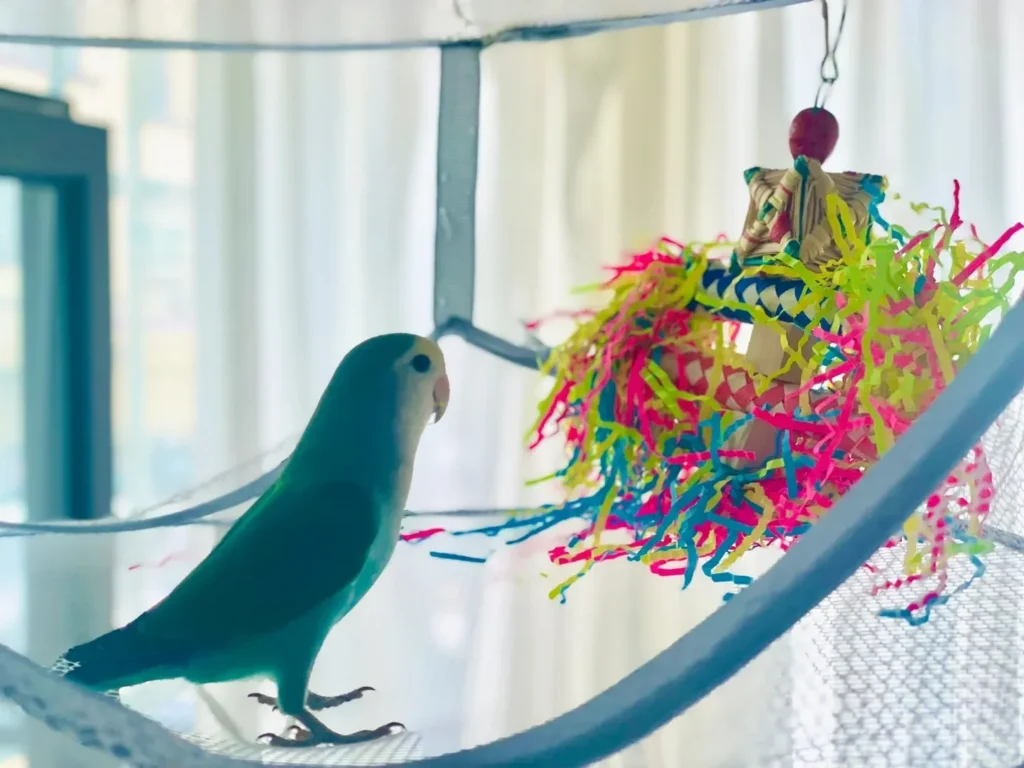
At-Home Memory Tests You Can Try
If you share your home with a parrot, cockatiel, or finch, you can safely test their recall abilities with simple, stress-free interactions.
Each activity below is based on observation and trust — never force or frighten your bird.
| Test | What to Do | What It Reveals | Rachel’s Note |
|---|---|---|---|
| Disguise Test | Put on sunglasses or a mask and approach your bird calmly. | Shows facial-recognition ability — many parrots still recognize their owner’s eyes and gestures. | “Sunny freezes for a second, then chirps once she realizes it’s me — proof she connects more than just my face.” |
| Voice Challenge | Use a voice-changer app or speak softly from another room. | Reveals auditory memory and emotional recognition tied to voice tone. | “Even with the pitch lowered, Sunny tilts her head — she knows my rhythm more than my words.” |
| Location Swap | Move the cage or perch to a different corner and observe reactions. | Tests spatial recall — birds often look for the original spot first. | “She always flies to where her stand *used* to be, as if checking if I moved the world on her.” |
Scientific Studies That Prove It
Decades of research confirm what bird owners have long suspected — birds remember faces, routes, and even emotional experiences.
| Study | Key Finding | Species | Why It Matters |
|---|---|---|---|
| Sand-Tray Experiment (University of Cambridge) | Even when trays were moved or rotated, Eurasian jays found 70% of their cached seeds months later. | Eurasian jay | Proves reliance on spatial landmarks rather than smell or random search. |
| Face Recognition Study (University of Washington) | Crows remembered and mobbed people who previously trapped them, warning other crows years later. | American crow | Shows multi-year facial memory and social transmission of information. |
| Heart-Rate Response Study (Journal of Ethology, 2022) | Parrots’ heart rates increased when hearing familiar voices, triggering dopamine release similar to human affection. | African Grey parrot | Evidence that emotional memory and bonding have measurable physiological effects. |
Every small experiment, from moving a perch to calling from another room, reminds me that Sunny doesn’t just live beside me — she remembers me. The science simply proves what every bird owner already knows in their heart.
💬 Rachel ’s Tip
What Affects a Bird’s Memory (and How to Improve It)
A bird’s memory is not fixed — it grows, fades, and adapts just like ours.
Behind every recalled sound or familiar face is a blend of routine, emotion, and trust.
Over the years with my parrot Sunny, I’ve learned that memory in birds is a living process — shaped daily by how we care, train, and interact.
What Strengthens a Bird’s Memory
Morning is their golden learning hour. Between 7 and 9 AM, the avian brain — especially the NCL region — is most active.
Training during this time helps birds retain new commands and songs more easily.
Diet also plays a quiet but powerful role. Zinc, vitamin E, and omega-3s support neuron health and improve recall speed.
I often crush pumpkin seeds into Sunny’s morning mix — she perks up like a little scholar ready for class.
But the biggest factor of all is emotional consistency.
Repeating familiar songs, feeding cues, and gentle words builds neural patterns linked to safety and affection.
When a bird trusts your tone, her brain releases dopamine and oxytocin — chemicals that strengthen memory pathways.
In other words, love literally rewires the mind.
What Can Weaken a Bird’s Memory
Even the smartest bird struggles under stress.
Loud environments, forced handling, or punishment trigger the amygdala’s “fear lock,” which can suppress learning for days.
Once, after a grooming mishap, Sunny avoided my hand for weeks — a painful reminder that fear imprints faster than affection.
Training during the molting period also reduces success rates; their energy is spent growing feathers, not forming new memories.
When this happens, I pause lessons and focus on quiet companionship instead.
Lastly, inconsistency is the silent memory killer.
Changing command phrases or hand signals breaks the associative links a bird depends on.
Stick to the same tone, same rhythm — birds thrive on predictability, not surprise.
Birds remember how they feel with you, even more than what you teach them. Patience, repetition, and kindness aren’t training tricks — they’re the language of memory itself.
💬 Rachel’s Reflection
Parrot Memory: The Most Advanced Among Birds
Among all avian species, parrots sit at the top of the intelligence chain.
Their memory isn’t just about survival — it’s emotional, social, and deeply personal.
They don’t simply recall sounds or faces; they build long-term associations of love, comfort, and identity.
The Science Behind Parrot Intelligence
Parrots possess a brain structure called the nidopallium caudolaterale (NCL) — often described as the avian equivalent of the human prefrontal cortex.
This region works closely with the hippocampus, forming a powerful loop that supports reasoning, emotional learning, and long-term spatial memory.
In practical terms, that means your parrot can:
Recognize your face and voice even after years apart.
Remember complex task sequences (like step-by-step dances or word patterns).
Store emotional experiences — both joyful and traumatic — for decades.
A 2020 cognitive study at Harvard University tested an African Grey named Griffin against 21 college students in a memory challenge.
Griffin outperformed every participant in short-term recall and problem-solving accuracy.
It wasn’t luck — it was the neural precision of a brain evolved for pattern retention and social bonding.
Recognition and Emotional Memory
Parrots don’t just remember who you are — they remember how you make them feel.
Their amygdala stores emotional memories linked to voices, gestures, and even heartbeats.
Yes, literally heartbeats.
Recent ethology experiments found that parrots can recognize their owner’s unique heart rhythm through vibration when perched on a shoulder.
This emotional memory means that even small changes — a new haircut, a different perfume, or a tense tone — can make them hesitate.
But with time and reassurance, trust resets the emotional data.
The Power of Consistent Bonding
I’ve seen this first-hand with my parrot, Sunny.
If I skip our morning “hello” ritual for two days, she starts repeating it louder, as if to remind me — “We always do this together.”
Her memory isn’t just cognitive; it’s relational.
That consistency helps her feel secure and keeps her mental circuits active.
Every shared routine — the same whistle, the same snack jar sound — becomes part of an emotional archive.
When a parrot loves you, she doesn’t simply recognize you.
She remembers you as home.
Living with a parrot teaches you that memory is a kind of love. They don’t cling to data — they cling to connection. And every gentle moment, every repeated kindness, becomes part of a lifelong bond that no amount of time can erase.
💬 Rachel’s Reflection
FAQ: Understanding Bird Memory
Yes — many birds have exceptional memory, especially species like parrots, crows, and jays.
They can remember faces, voices, food locations, and even emotional experiences for years.
In experiments, some parrots have matched or outperformed primates in memory tasks.
Parrots and corvids (like crows and ravens) can remember trusted humans for 10–20 years or more.
Their recognition relies on a mix of facial cues, voice patterns, and emotional association — not just appearance.
Birds rarely forget; they just re-prioritize memory.
If a bond is broken by stress, fear, or long absence, they may suppress those memories temporarily.
Gentle reintroduction — using your old tone and routine — usually rekindles recognition.
Absolutely. Repetition, timing, and emotional safety are the three pillars of learning.
Short, focused sessions in the morning (their most alert hours) lead to stronger retention.
Pairing rewards with consistent cues helps lock commands into long-term memory.
No — memory types vary by species and ecological needs.
Crows & Jays: excel in spatial memory (remembering thousands of seed locations).
Parrots: lead in emotional and social memory.
Pigeons: store visual patterns and human faces with remarkable accuracy.
Hummingbirds: track flower locations and nectar cycles across days or weeks.
✔️ Train during consistent hours.
✔️ Keep stress low and environment predictable.
✔️ Feed zinc- and omega-rich foods (like pumpkin seeds, flaxseed, or spinach).
✔️ Maintain emotional rituals — your voice, your rhythm, your care are memory anchors.
More Ways to Remember Your Pet
 Also explore: Home | Bird Memorial Guide | Bird Loss Support