
This is so beautiful! Looks wonderful in my cat's little memorial garden. The lights are surprisingly bright.
I saw one review mentioning how wide the photo slot is and how rain gets in it, so I covered the gap with gorilla tape and the picture has held up great! If you buy, I highly recommend covering the whole opening of the slot with tape or hot glue or something.
This is a wonderful little statuary for memorializing a lost cat. My wife and I lost both our cats during the pandemic, and I wanted a way for our first pets together to stay with us. This statue is adorable, and I love that it contains a place where I put the picture of my passed kitties. It holds it well and should be fine as long as it isn't directly exposed to the elements. We keep it outside, but under an awning, and it's kept well. The statue is pretty small, so it can fit amongst a garden or in am apartment. The detail of the cat angel is pretty high, especially for something so small. I got it for my wife, and she loved it.
Keep it in a covered area, the two lights aren't terribly bright but this is still quite cute.
While it looks like it's concrete it's made out of plastic so our initial intent of putting this actually on the grave of our recently departed who was interred on the hill in the back of our property, my grandson instead needed to put it on our covered porch to keep it from getting ruined. My grandson measured the viewable picture part, his mother laminated the picture of Theodore and my grandson put it in.
We see each day as we enter and leave the house, it's comforting to see his sweet little face even though he has been gone for a couple of months. I feel like this is actually helping my grandson with his grieving, he touches the stone each day as he leaves and enters the house and smiles instead of just being sad that they adore is no longer with us. It's super cute.
The Angel Wing it’s just totally adorable, I lost my baby two weeks ago and my heart is broken. It lights up and it’s an awesome night light. I use in my fur babies room.
I would highly recommend it very good quality, and the brightness is awesome
This dog memorial statue is absolutely beautiful and heartwarming. The craftsmanship is excellent, with every detail thoughtfully designed to capture the love and bond we share with our pets. It’s sturdy, well-made, and looks even more meaningful in person. Placing it in the garden/house brings such a comforting presence and serves as a touching reminder of a beloved furry friend. A truly special way to honor and keep their memory alive.
Got this as a birthday present for my mother. She absolutely loves it. Solar powered light that has a nice brightness at night.
I ordered this and when it came it was packaged very nice. I put it outside and it works great. The lights are bright enough and looks pretty.
Works great looks fine. But is very lightweight so wouldn’t expect it to stay put well if it’s not somewhere secure.
This is a beautiful piece. Anyone who lost a pet would love this so much. Being able to add a picture gives it that special touch. Great quality. Very happy with it.
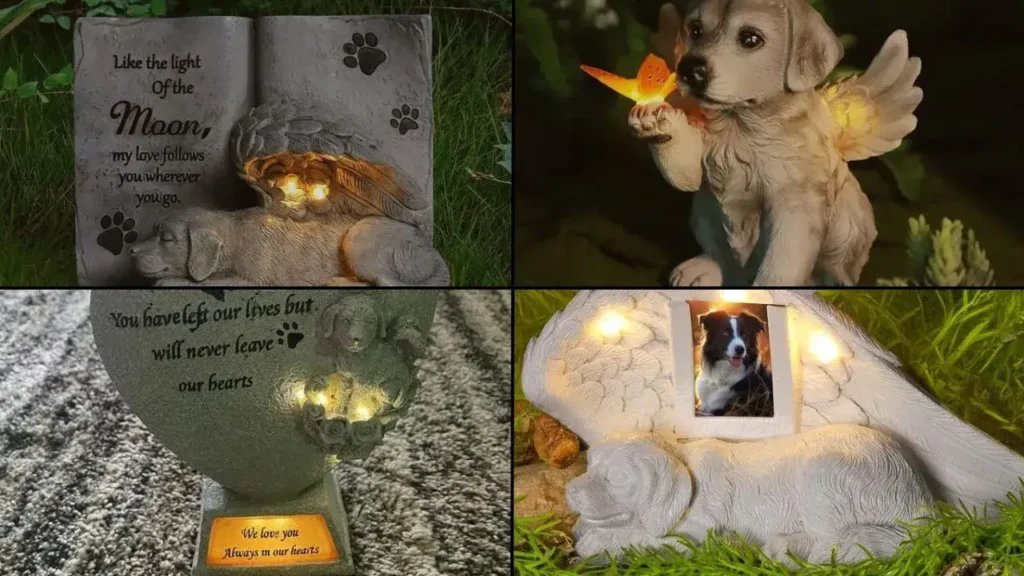
I chose this angelic pup statue to put in my garden to in memory of my own dogs who have passed in recent years. There are many different versions of this pose, some are quite pricy. though not unique enough for their prices. In this sculpture I liked the 3 bright solar lights on the wing, I could see their golden glow, easily in the darkness which softly illuminated the white of the resin stone. The little angelic pup statue with solar lights is a touching serene scene.
I love this little guy. It's a nice size not over taking the garden area but not so small it won't be noticed. It's so pretty at night. I'm really surprised at how much it lights up. I got mine late afternoon and really didn't expect it to light up the fist night after only having a couple hours of sun. It's not overly heavy but heavy enough that it's not going to blow over in a wind storm. It's made of a nice sturdy resin and I think a really nice price. I would definitely buy this again
This solar light has an angel puppy with a butterfly on his paw! The butterfly lights up but what's very special are the wings glowing! This would be a perfect memorial/grave stone for a lost love at a very reasonable price! Glows great with proper charging time! This is one of the most touching statues I've ever seen!
Beautiful piece and perfect to place over my cat’s grave. The solar works just fine and glow nicely warm orange just like the color of my cat. His sisters also visited him today and I’m pretty sure they love it too.
Thank you for replacing this item after the first arrived broken into a hundred pieces!! I just lost my baby on August 7th after 15 years with her and this is PURFECT!! My mom lives next door and can even see it from her house!! It’s gorgeous!!
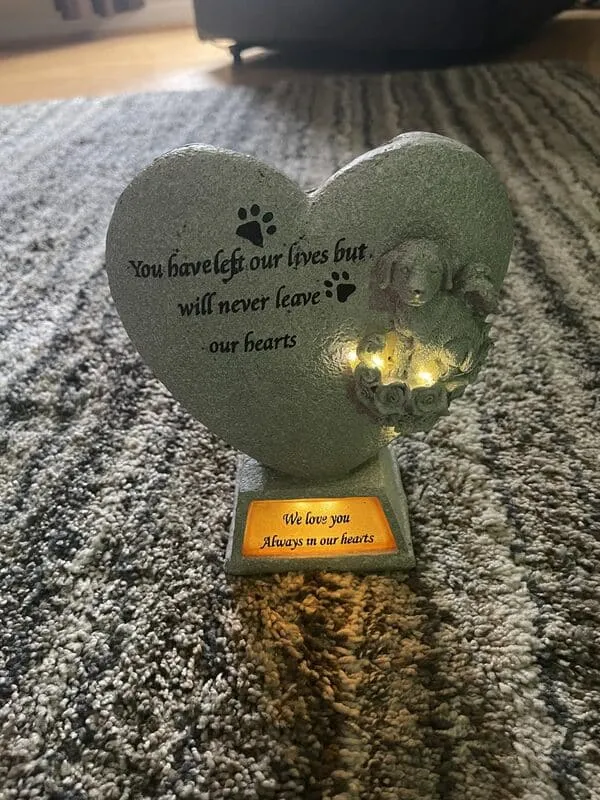
This is a really sweet memorial piece and was a nice addition to the pet memorial garden we have made on our property. It is on the lightweight side and the way it's made, it may tip over very occasionally, but we have to check things over there regularly for such instances so that's not a big deal for us. It lights up well with the solar power, and one thing I really love about this one is that you can put flowers (albeit small ones) in the top - that to me really adds to its value as a memorial piece, as well as the message on it which is very touching and sweet. Overall, this is a nice little memorial piece, not large but not too small, and would also make a great gift for anyone that's lost a pet.
As described, it's quite sturdy, and a I love that it works right away. It has a good weight to it so it won't fall easily. The light glows in a way that I would describe for remembrance.
I got this for a neighbor who lost her fur baby. She loves it! It's very well made and not gaudy. It's the perfect size under her tree and not too heavy to move when trimming.
My sweet neighbor had her older dog pass recently. My family is close to this neighbor and helped care for their dogs on occasion and grew close to the dogs too. We bought this as a gift in memory of their dog when she passed away. They love it and put it on their back deck where they sit all the time and they said it is a really nice way to memorialize her.
 Also explore: Home | Pet Memorial Guide | Pet Loss Support